
Office Address
Rodney Bay, St. Lucia
Phone Number
+1 7584602257
Email Address
info@tripcarib.com
Rodney Bay, St. Lucia
+1 7584602257
info@tripcarib.com

Short answer: if you are prone to motion sickness, St Lucia's roads will test you, particularly the winding coastal run between the north and Soufriere. But almost nobody has to skip the island's best sights because of it. Sitting in the front, taking something before you set off, travelling with a driver who does not rush, and using the sea route where possible solves it for the large majority of visitors. We drive these roads every day with guests of every constitution, so here is the honest picture.
This is one of the more emotionally loaded questions we get, because people have usually already booked, already seen photos of the Pitons, and are now quietly worried they will spend their dream holiday feeling green. If that is you, read on, because the answer is more reassuring than the internet suggests.
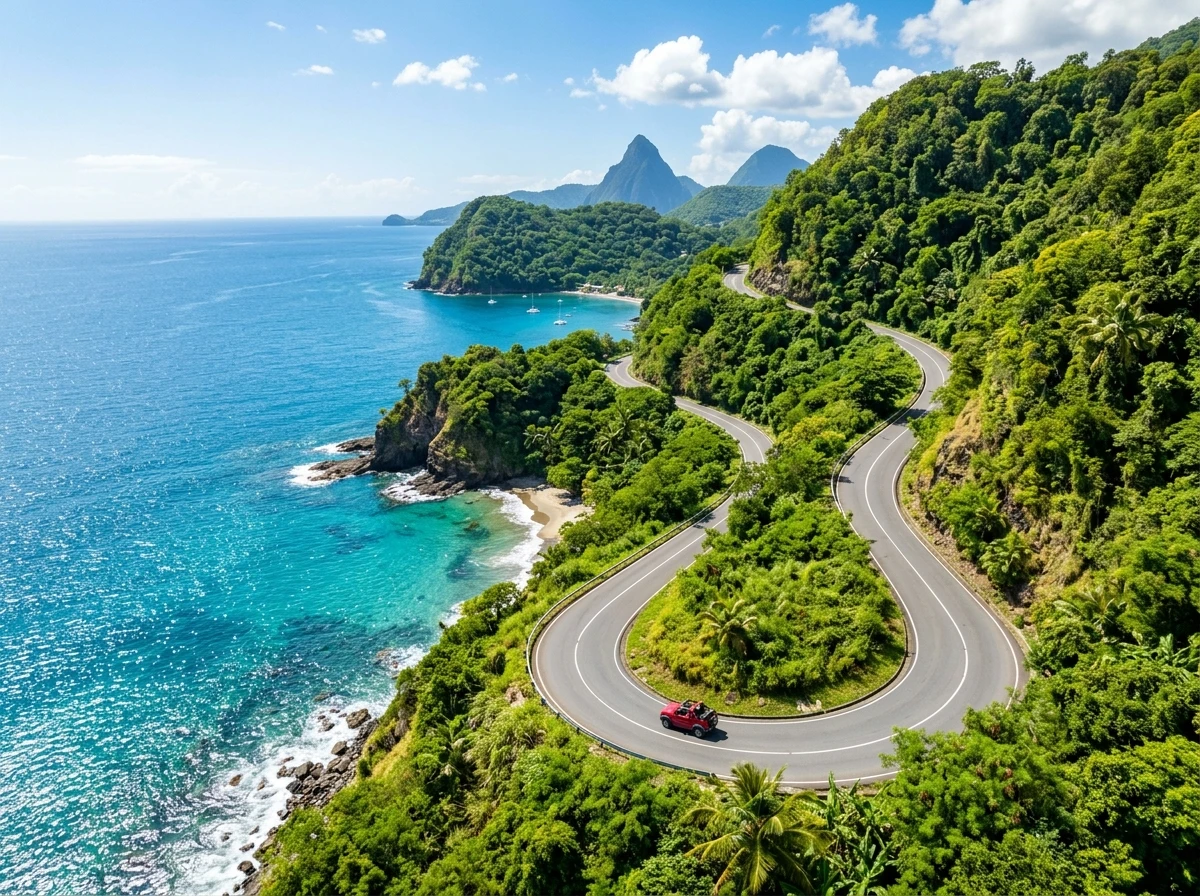
They are genuinely winding, steep and narrow, with sustained bends and real elevation change, especially on the west coast route toward Soufriere and through the southern half of the island. Beautiful, entirely drivable, and demanding on a sensitive stomach.
Let us be straight rather than reassuring. This is a mountainous volcanic island, and the roads follow the terrain rather than cutting through it. The stretch between the north and Soufriere climbs, drops and turns almost continuously. Northern roads around Castries and Rodney Bay are noticeably better maintained and gentler, while southern roads are rougher, partly because heavy tropical rain damages asphalt faster than it gets repaved.
Travellers who have made the drive describe it consistently: spectacular scenery, constant curves, and few places to pull over on the approach to the volcano. That last detail matters if you are planning around a queasy passenger, and it is one of the reasons we recommend against improvising this trip.
No. Plenty of motion-sensitive visitors do this drive comfortably, and the difference almost always comes down to where you sit, what you took beforehand, and who is driving. The same route produces very different experiences depending on those three things.
Travellers who get carsick at home report a real spread of outcomes here. Some describe feeling slightly queasy but not enough to spoil the day. Others who normally struggle say they were completely fine because they sat in the front seat with a driver who took the bends gently and stopped often. And some, warned off by forum horror stories, skipped the drive entirely and later regretted it.
The honest summary: your odds are good, and they get better with preparation.
Sit in the front, take motion sickness medication before you set off rather than once you feel unwell, keep air moving, look at the horizon rather than your phone, and travel with a driver who paces the road and stops when asked. These five things solve it for most people.
Working through them properly:
Front seat. This is the single most repeated piece of advice from travellers who manage the drive well, and it genuinely works because you can see the road ahead and anticipate the turns. On a private tour you can simply ask. On a packed group coach, you cannot.
Medication timing. Take it before you leave, not when the nausea starts, since most remedies need time to work. Some travellers take something the night before as well, others use patches or ginger. Whatever you normally rely on at home, bring it and use it early.
Air and horizon. Keep a window cracked or the vents on you, and look out at the coastline rather than down at a screen. Open-air vehicles help some people considerably, which is why buggy and jeep tours suit certain groups.
Pacing and stops. This is where the driver matters most. Someone who takes the bends smoothly and pulls over when you ask changes the entire experience. Our island excursions run private, so the pace is set by your group rather than a coach schedule, and stopping for five minutes of fresh air is never a problem.
Eat lightly, hydrate. A heavy breakfast before a mountain drive helps nobody. Water and something light is the better plan.
The north to Soufriere run is the most demanding. Airport transfers from Hewanorra are moderate. Journeys within the north around Rodney Bay, Gros Islet and Castries are easy. Knowing this lets you plan around your own tolerance.
Here is how we would rank the common routes for a motion-sensitive passenger:
If you are staying in Soufriere already, you have quietly solved this problem, since the volcano, the waterfalls and the Piton viewpoints are all minutes away rather than an hour and a half. That is worth knowing at the booking stage, and our resort vs villa and area guidance touches on how location shapes the whole trip.
Yes. Water taxis along the west coast reach Soufriere and the Piton beaches by sea, which avoids the winding road completely, and for some travellers this is the answer. The sea route is also, frankly, the more beautiful arrival.
This comes up repeatedly among travellers who know they struggle in cars, and it is sound advice. Boats run along the calm western coast, and arriving at the Pitons from the water is something guests remember for years. One honest caveat: if you are prone to seasickness as well as carsickness, swap one problem for another only with preparation. Details on how the boats work and what they cost are in our water taxi guide, and non-guest access to the famous beach between the Pitons is covered in our Sugar Beach guide.
Drivers rarely get carsick, so if you are the one behind the wheel you may be fine, but the roads demand full concentration and driving is on the left. The question is really about your passengers.
There is a genuine irony here: the person most likely to feel unwell is the passenger, and driving yourself often cures it. But St Lucia's roads are not the place to learn left-side driving under pressure, and a driver fighting nausea is a safety issue rather than a comfort one. Read our honest assessment in is driving in St Lucia hard before deciding, and remember there is no Uber in St Lucia if you change your mind mid-trip.
Are the roads in St Lucia windy? Yes, particularly the west coast route toward Soufriere. Northern roads around Castries and Rodney Bay are gentler and better maintained.
Will I get carsick on a St Lucia island tour? You might if you are prone to it, but most motion-sensitive visitors manage well by sitting in front, medicating beforehand and travelling with a driver who paces the road and stops on request.
What is the best seat if I get carsick? The front, without question. It is the most consistent advice from travellers who handle the drive comfortably.
Can I avoid the winding roads and still see the Pitons? Yes, take a water taxi along the west coast. It skips the road entirely and the arrival by sea is spectacular.
Are private tours better for motion sickness than group tours? Generally yes, because you can request the front seat, set the pace and stop whenever you need to. A group coach runs to its own schedule.
Which part of St Lucia has the easiest roads? The north. Journeys around Rodney Bay, Gros Islet and Castries are short and comparatively gentle.
St Lucia's roads are winding, and if you are motion sensitive you will feel them. But very few visitors actually have to give up the volcano, the waterfalls or the Pitons because of it. Sit in front, take something before you set off, keep the air moving and your eyes on the horizon, and travel with someone who is not in a hurry. Where the road still feels like too much, the sea route is waiting, and it is the better view anyway.
Tell us if anyone in your group struggles with winding roads when you book, and we will plan the seating, the pacing and the stops around it.